

Is your child between 0 and 5 years old?
- Do you have concerns about their development?
- Do people around you seem to misunderstand your child when he or she speaks?
- Have you noticed that your child often stumbles?
The Agir Tôt program can help you.
Description of the Program
The Agir tôt program is for children aged 0 to 5 and their families. It aims to identify indicators of developmental difficulties in children so that they can be directed to the right services quickly.
The objective of the program is to support developing children's full potential and facilitating their start in kindergarten.
The Centre intégré universitaire de santé et de services sociaux (CIUSSS) de l’Ouest-de-l'Île-de-Montréal is currently developing several projects to integrate new services and offer them as quickly as possible.
The spheres of child development
Early childhood is a period rich in learning that involves many areas of development. That's why the Agir Tôt program focuses on each element of this pattern:
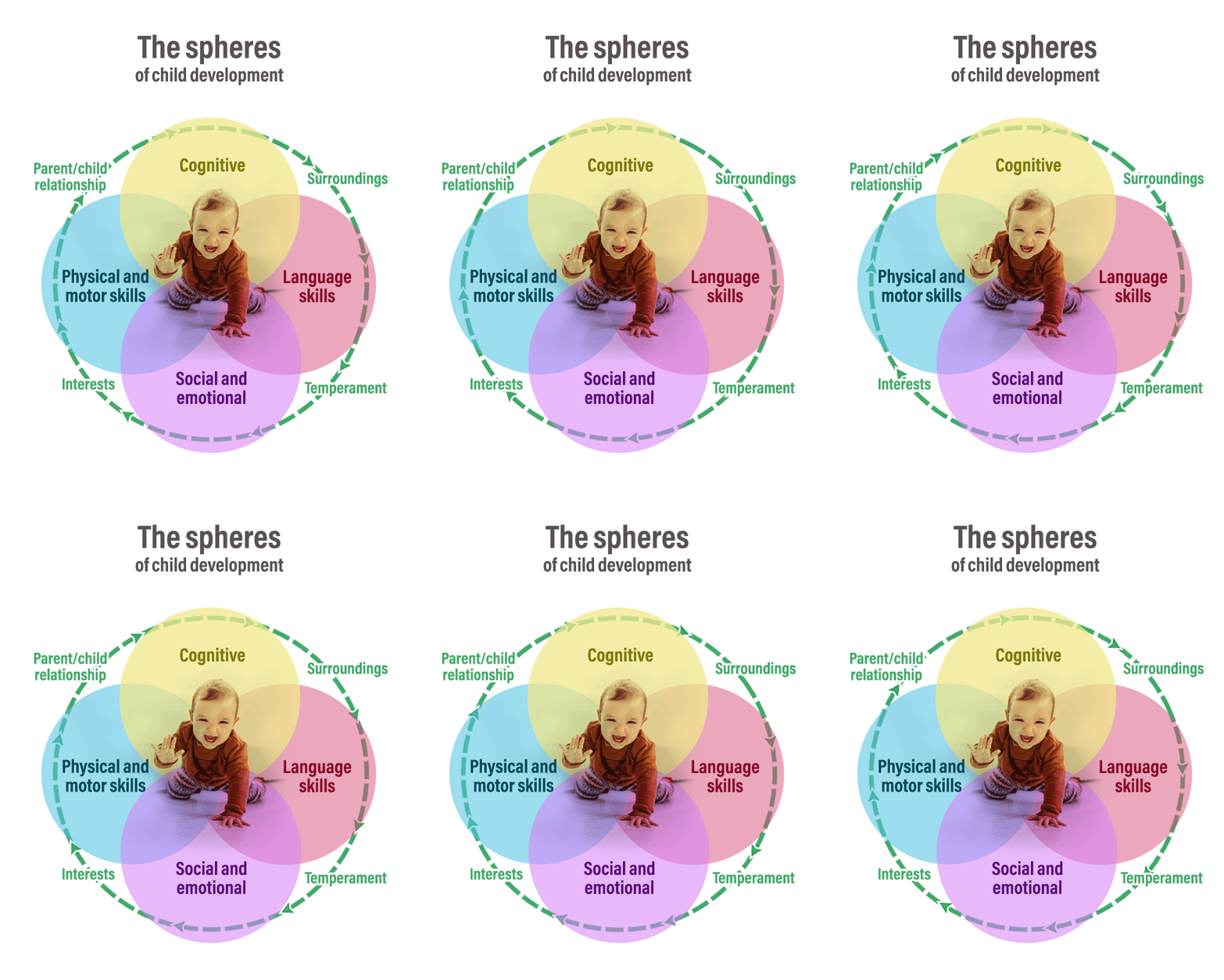
It takes some practice to learn how to walk, to make sentences, to play with others or to wait for your turn. Sometimes, some children need a helping hand to thrive.
Services offered
The Agir tôt program addresses the various needs of children and their families through several types of services such as:
- Workshops;
- Interventions in various forms;
- Simple tips.
These free services are available to parents who wish to participate.
Developmental monitoring
Adults and professionals who are present in your child’s life also play an important and complementary role. They also monitor your child’s development on an ongoing basis to help quickly identify possible indicators of difficulty.
Concerns about the child's development may be raised by parents or through observations at different points in the child's development:
- During vaccination;
- During appointments with doctors;
- At the daycare;
- In Junior Kindergarten (4-year old children);
- In the community setting, etc.
Immunization at the age of 18 months is a key time to spot warning signs in a child's development. These clues could be used to refer the child to the services of the Agir Tôt program.
For more information, consult the 18-month vaccination appointment-Agir tôt program:
- Consult this checklist, which will be provided before the appointment and will help guide parents' observations prior to the appointment.
- Watch this preparatory video, which outlines the appointment process and the observations that will be made by the healthcare staff.
Screening
If the child shows any signs of developmental difficulties, they will be referred to the Agir Tôt screening program. The screening involves completing an online questionnaire available on the Internet and a discussion with a caseworker. The questionnaire covers various aspects of a child’s development. Based on the results, the family and child will receive support, assistance, and a referral to services according to the child’s needs.
You can listen to our interview with Julie Girouard, and occupational therapist who is clinical lead for the Agir tôt program’s screening platform.
We touch on the following subjects:
- What is screening and what aspects of child development does it assess?
- Why is early detection of developmental difficulties in children important?
- What signs should parents look for? When should they seek help?
Early interventions
The Agir tôt program gives access to a variety of services offered by teams composed of specialists from multiple disciplines. Interventions aim to:
- Help you, as a parent, better assist your child through the stages of development and in your daily life;
- Offer stimulation and intervention to help your child develop and function well at home, at daycare and at school;
- Prepare the child for kindergarten and help him/her make the transition.
- Assist you through the processes and services offered.
How to ask for help?
If you have a concern about your child's development, contact your local CLSC:
- CLSC de Dorval-Lachine : 514 639-0660
- CLSC de LaSalle : 514 364-2572
- CLSC du Lac-Saint-Louis : 514 697-4110
- CLSC de Pierrefonds : 514 626-2572
For more information, visit the government website.
References and resources
Here are some resources recommended by professionals from the Agir tôt team. They may help you better understand the situation and find useful strategies you can start applying in your everyday life.

References on child development
- What to expect when your child is two
Information sheet developed to support the parent in observing the skills expected at the age of 2.
Ministère de la Santé et des Services sociaux - Stages of growth – From Tiny Tot to Toddler from pregnancy to age two
Institut national de santé publique du Québec - Child’s development from age 1 to 3 step by step
Naître et grandir - Child’s development from age 3 to 5 step by step
Naître et grandir - Le développement de l’enfant au quotidien - De 0 à 6 ans (tableaux synthèses - PDF) - In French only
Éditions du CHU Sainte-Justine - Informational videos on well-being and development for children aged 0 to 8 - In French and in English
Naître et grandir - Information sheets for parents of children aged 2 to 5
Information sheets covering the following topics: parent-child attachment, managing emotions, managing stress, discipline, development, routines, learning personal hygiene, nutrition, sleep, play, screen use and communication
Ministère de la Santé et des Services sociaux - Développement de la communication chez l'enfant de 0 à 6 ans - In French only
Information on hearing skills and language development
Ordre des orthophonistes et audiologistes du Québec - Vidéos Dis-moi – Le développement de l’enfant - In French only
Video series to better understand early childhood development
Association québécoise des centres de la petite enfance - Caring for kids
Health information for children provided by Canadian pediatricians, in English and French
Canadian Paediatric Society - Encyclopedia on Early Childhood Development
For parents and professionals, information on various topics, in French and English
Abilio - Childhood Knowledge Dissemination Centre – Université Laval and Université de Montréal - Videos - Encyclopedia on Early Childhood Development
Abilio - Childhood Knowledge Dissemination Centre – Université Laval and Université de Montréal
Resources for getting professional advice
- Première ressource
514-525-2573 ou 1-866-329-4223
consultation@premiereressource.com
Free professional consultation service for parents of children aged 0-18, by phone, chat or email
Available in French and in English - Ligne parents
1-800-361-5085
Telephone support for parents of children aged 0-20.
Psychosocial counselling for parents and caregivers 24 hours a day, 7 days a week
Available in French and in English - Info-Santé 811
Health advice given by a nurse 24 hours a day, 7 days a week
Available in French and in English - Info-Social 811
Psychosocial advice given by a psychosocial worker 24 hours a day, 7 days a week
Available in French and in English
Directories for finding community resources
- 211
Multilingual service that lists and directs to socio-community resources in the regions of Quebec - Fédération québécoise des organismes communautaires Famille (FQOCF) - In French only
Directory to find family community organizations in the regions of Quebec
Community and network partner
How to refer a child and his/her family to the Agir Tôt program
When there are concerns about a child's development, several practitioners may now make a request:
- Physicians, paediatricians or private practice workers;
- The educational child care team;
- The kindergarten teacher or members of the in-school team;
- The worker from the health and social services network or from a community organization
Please note! You must inform the parents of the referral process and you must obtain parental consent to refer the child and his/her family to the Agir Tôt program.
At the time of referral to the program, it is important to provide as much information about the child as possible, including:
- Your concerns about the child's development;
- The difficulties observed in the child and their impact on his/her daily functioning;
- The child's strengths and those of his/her family;
- Support deemed necessary.
If documentation concerning the child's development is already available, please attach it to the request (e.g., medical notes, educational records, teacher's observations, professional assessment report).
Click here for more information or to submit a request for services.
Subscribe to the newsletter to partners and users to be informed about the latest developments and progress of the provincial Agir Tôt Program.