

Importance of the Institution’s Users’ Committee
The CUE plays a key role when it comes to promoting and defending users’ rights. It also helps improve the user experience and the quality of care and services in institutions across the network.
The CUE gives users a voice. It is a representative and effective body within Santé Québec’s institutions.
Click here for the Election Notice
Appointment of the Institution’s Users’ Committee (CUE) Executive
It is our pleasure to announce the newly appointed members of the Institution’s Users’ Committee Executive (CUE). The team is now in place and ready to resume its work with dedication and enthusiasm.
You can consult the mandate of each of the members in the CUE guidelines. (in French only)
The Executive consists of:
- President: Chantal Bellerose
- Vice-president: Claudel St-Pierre
- Secretary: Bonnie Cuthbert
- Treasurer: John Brkich
We wish them best of luck in their new roles!
Roles and Responsibilities
The CUE has the three (3) following responsibilities:
- Represent the institution’s users’ committees/comités des usagers (CU) and residents’ committees/comités des résidents (CR);
- Coordinate those committees;
- Harmonize practices across committees.
In performing the statutory functions stated below, the CUE adopts a general (regional) perspective that takes into account all the user groups, the institution’s missions, and the territory in which it operates:
With regard to users and residents (Section 185, Act respecting the Governance of the Health and Social Services System [LGSSSS], the CUE must:
- inform them of their rights and obligations;
- foster the improvement of the quality of their living conditions and participate in the assessment of their degree of satisfaction with regard to the services obtained from the institution;
- defend their common rights and interests;
- at the request of a person, defend the person’s rights and interests as a user or a resident before any competent authority;
- accompany and assist, on request, any user or resident, in any action they undertake, including when they wish to file a complaint.
To properly fulfil its role, the CUE must also:
- ensure the proper functioning of each of the users’ and residents’ committees, and see that they have the resources necessary to exercise their functions (Section 185, LGSSSS);
- advise the president and executive director of the possibility of forming a residents’ committee common to a number of facilities grouped by the president and executive director (Section 180, paragraph 2, LGSSSS);
- establish their operating rules (Section 185, LGSSSS);
- submit a yearly report of its activities to the institution board of directors/conseil d’administration d’établissement (CAE) and to the national users’ committee/comité national des usagers (CNU) (Section 186, LGSSSS);
- establish and maintain communication channels with all CU and CR;
- collaborate with the CNU, the institution, all CUE, CU, and CR, and other RSSS partners in carrying out their duties;
- represent the CU and CR by welcoming their recommendations;
- ensure the coordination of activities relating to CU and CR activities;
- see to the harmonization of CU and CR practices, in collaboration with the CNU;
- implement the recommendations, rules, policies and procedures established by the CNU and the headquarters of Santé Québec;
- manage the budget provided by the institution and validate the allocation of funds earmarked for the CU it oversees, in accordance with the established budgetary parameters;
- keep accounting records and the supporting documentation needed to prepare its financial report and annual reporting;
- implement rules for authorizing CUE, CU, and CR expenses in compliance with eligible expenditure rules, and validate budget-use priorities;
- submit, on an annual basis, a list of its key priorities and recommendations for improving the quality of care and services to the CAE and the CNU, along with copies to the comité de vigilance et de la qualité (CVQ) and the CEO;
- adhere to the institution’s civility and harassment-prevention policies;
- establish dispute resolution mechanisms, such as self-assessment, mediation, and conciliation, to resolve potential issues within the CUE, the various CU and CR, between these committees, or with the institution.
Candidates elected by acclamation
Seat : Residential care, veterans
 | Name : Chantale Bellerose City/Borough: Île-Perrot Experience as a user, resident, loved one or informal caregiver : President of the Ste. Anne’s Hospital Residents’ Committee for the last year, president of the Integrated Users’ Committee for the last 6 months, supported various users’ and residents’ committees at Santé Québec Centre-Ouest-de-l'Île-de-Montréal - Universitaire for 15 years. Informal caregiver for her mother and aunt for 25 years. Reason for applying: To defend and advocate for improvements in quality of life and living conditions. |
Seat : Obstetrics and early childhood
 | Name : Adriana Gomez City/Borough : Montréal Experience as a user, resident, loved one or informal caregiver Has been part of West Island Citizen Advocacy for 3 years.. User and informal caregiver. Reason for applying : To defend users’ rights. |
Seat : Intellectual disability, autism spectrum disorder and physical disability
 | Name : Lise Bougie City/Borough : Vaudreuil-Dorion Experience as a user, resident, loved one or informal caregiver : President of the West Montreal Readaptation Centre for the last year, member of the Integrated Users’ Committee for the last year. User and informal caregiver for her 43-year-old son who lives with a physical and an intellectual disability. Reason for applying : To defend users’ rights. |
Seat : Mental health
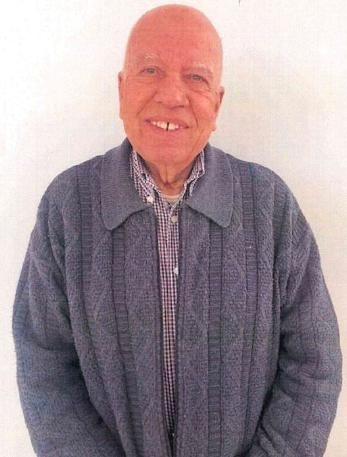 | Name : Abdelkarim Elgadi City/Borough : LaSalle Experience as a user, resident, loved one or informal caregiver: President of the Douglas Mental Health University Institute Users’ Committee for the last 15 years, president of the Residents’ Committee at CHSLD des Berges-de-Lachine for the last 5 months, member of the Integrated Users’ Committee for the last 10 years. Informal caregiver-has been caring for his son who has been receiving services at the Douglas Mental Health University Institute for 25 years. Reason for applying: To represent users and defend their rights and interests. |
Seat : Physical health
 | Name : Claudel St-Pierre City/Borough : Vaudreuil-Dorion Experience as a user, resident, loved one or informal caregiver : President of the Residents’ Committee at CHSLD Denis-Benjamin-Viger for the last 12 years, president of the Lakeshore General Hospital Users’ Committee for the last 12 years, member of the Integrated Users’ Committee for the last 10 years. User and informal caregiver. Reason for applying : Wants to be involved in ensuring the well-being of users and contribute to continuous improvement of care and services. |
Seat : Residents’ Committee
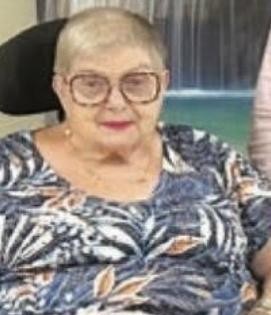 | Name : Jean Vidal City/Borough : LaSalle Experience as a user, resident, loved one or informal caregiver : President of the Residents’ Committee at the Centre d’hébergement de LaSalle for the last 3 years, member of the Dorval-Lachine-LaSalle Users’ Committee for the last 2 years, and member of the Integrated Users’ Committee for the last year. Resident. Reason for applying : To defend users’ rights. |
Seat : Grouped facility – St. Mary’s Hospital Centre
| Name : Bonnie Cuthbert City/Borough : LaSalle Experience as a user, resident, loved one or informal caregiver : President of the St. Mary’s Hospital Centre Users’ Committee for the last several years. User. MReason for applying : To represent users and defend their rights. |
Seat : Grouped facility – Grace Dart Extended Care Centre
 | 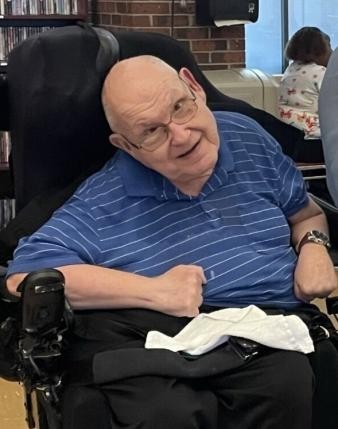 | Name : John Brkich City/Borough : Montréal Experience as a user, resident, loved one or informal caregiver : President of the Users’ Committee at the Grace Dart Extended Care Centre for over 15 years. Resident. Reason for applying : To support residents and staff. |
Seat : Grouped facility – Douglas Mental Health University Institute
| Name : Félix-Antoine Carignan City/Borough : Montréal Experience as a user, resident, loved one or informal caregiver : Political attaché and communications assistant for the office of the Member of Parliament for Chicoutimi-Le Fjord. User. Reason for applying : To provide constructive feedback from the users’ perspective. |
Documentation
- Processus électoral (in French only)
- Directive – Comités des usagers d’établissement (in French only)
For more information
For additional information, please contact the election chairperson:
Adriana Krasteva